Showing posts with label Politics. Show all posts

Monday, September 02, 2013

Danger Zone

Central America does not get a good press. Apart from Costa Rica there is a pervading stereotype of violent crime and gangs. some of that is justified. Honduras's economic capital San Pedro Sula has the unenviable distinction of being the most violent city in the world with a murder rate of almost 170 per hundred thousand inhabitants (to put that into perspective there are more murders in San Pedro Sula, a city of some 720,000 inhabitants, than in Germany and Italy together, with a combined population of 160 million i.e. a 220 times greater murder rate). Most of this violence is perpetrated by gangs on other gangs and so does not generally affect normal people. Nevertheless there is a level of violent crime that is of an order of magnitude more than in most other parts of the world. Why is that?

The ubiquitous razorwire gives Central America a war zone feel.

Tuesday, August 06, 2013

In The Zone

Panama is known, of course, for its canal and hats, the latter of which, paradoxically, are actually Ecuadorean. Its strategic location as the shortest route from the Atlantic to the Pacific has always made it an important place on the geopolitical stage, which has been both a blessing and a curse. The country gets substantial revenue and employment just from the simple fact that it is where it is, but that has also made it victim to the whims and caprices of greater powers throughout its history.

Despite the Spanish language American influence is more predominant in Panama. Not just the predilection for  skyscrapers, but also fast food, bland urban architecture, and shopping malls.

Sunday, March 10, 2013

The President Is Dead! Long Live The President!

Hugo Chavez was pronounced dead at 4:25pm on Tuesday, the 5th of March. My bus arrived in Caracas at 6pm. I didn't realise until I was on the local bus and heard it on the radio. Although I might have doubted my Spanish skills I couldn't doubt my eyes when I arrived in the city centre and saw it invested with police and national guardsmen at every corner. Every shop was shuttered and there was a sense of an impending storm on the streets. I couldn't find the hostel that I had noted from the internet and was wandering around trying to find somewhere affordable to spend the night without being too conspicuous. Caracas has an unenviable reputation as a dangerous city, and whilst I would scoff at such safety paranoia in Asia my experience of Latin America is not my area of expertise and so I thought it better to play it safe. After a deal of blind wandering I came across an open doorway in a deserted back street with people loitering on the threshold and the word hotel above the door. It looked like a den of ill repute but I was past caring, the rucksack on my back was making me feel uncomfortable and the price was reasonable.

In Venezuela Chavez is everywhere. The cult of personality might not be of Turkmenistani proportions, nevertheless it is hard to get away from him, especially in Caracas. (These posters declaim: "From your hands comes the water of life. We love you!" No false modesty there then.)

Wednesday, January 30, 2013

Once Were Warriors

Having been to the far south of New Zealand I thought it only fair to make my way to the far north as well. Unlike the South Island, which was sparsely inhabited by Maori, this has always been the Maori heartland. To this day the region is home to the highest Maori concentration in the country and is an essential stop for anyone wishing to try and understand the two sides to New Zealand. I find it useful, when thinking of New Zealand, to compare it to Australia. Of course they vary markedly in size and geography, but their recent histories share many similarities that do make such comparisons meaningful. Both were inhabited by indigenous populations that were isolated from the rest of the world until their contact with Europeans in the 18th century (not 100% true for the Aborigines of the Top End who traded with the Makassarese, but good enough as a generalisation); became British colonies; indigenous people were greatly dispossessed by the colonists; gained independence in the early 20th century; economies are mainly based around primary resources (mineral for Australia, agricultural for New Zealand). Yet despite these similarities there are glaring differences between the two, most notably with regards to their indigenous peoples.

Australian and New Zealand road signs share a common design, but instead of kangaroos you have kiwis, and instead of wide, flat, limitless expanses you have volcanoes.


Tuesday, May 01, 2012

East Is East

Six days in Brunei was enough and so I set off for Sarawak. One of the reasons I stayed so long was that I wanted to do a trek to Gunung Mulu national park, just outside the Bruneian border and accessible from BSB. It is famous for housing one of the largest caves in the world which is home to a population of several million bats as well as some magnificent primary rainforest and karst terrain. To be able to afford the tour though I had to find other people with whom to split the costs of transport, guides and porters, but unfortunately I had no luck. Such is the way when travelling solo: sometimes it is not possible to do certain activities because you need a group of people and they just aren't available. Instead I had to make do with the caves at Batu Niah, also in Sarawak, but only a dozen kilometres from the main highway instead of requiring several days' hike (or a trip by plane). The main cave there is also staggeringly huge and is home to several species of bats and swiftlets, whose droppings, like in caves throughout the region, carpet the floor and give it a characteristic, overpowering odour. What perhaps makes the caves at Niah special are that they have been home to humans for some 40,000 years, with some of the oldest archaeological finds in all of southeast Asia. And they have been continually used for that entire time up to the present day, where local tribes collect swiftlet nests. Although it's not the season for collection the bamboo scaffolds used by the collectors are still up and extend vertiginously 50m or more up to the roof of the cave, seemingly held aloft by a single, narrow pole, somehow defying the laws of gravity.

Looking back at the entrance to the main cave at Niah. You can see that plants manage to grow for a little distance into the cave, but then lack of sunlight allows only a few hardy mosses to grow and then nothing.


Monday, April 02, 2012

Risk And The Perception Of Risk

Most visitors to the Philippines do not visit the southern island of Mindanao. But then again neither do Filipinos who live in Luzon and the Visayas. Not because they can't afford it (although it's true that many can't it is possible to get a cheap, budget airline ticket from Luzon to Mindanao for only $20 or less, well within the reach of the burgeoning Philippine middle-class), but because they are afraid to. Mindanao is home to various separatist rebel groups (such as the unfortunately-named MILF) and has seen numerous bombings, abductions and killings of foreigners and locals alike. For most ManileƱos it's a lawless, anarchic place with danger lurking around every corner, completely forgetting that the vast majority of people who live there are ordinary citizens just trying to get on with their lives (if it was so dangerous they would have probably left long ago themselves). I, however, despite the many warnings and looks of incredulity from other Filipinos, was determined to go there. Partly because I find that there is always a huge disconnect between risk and the perception of risk. Often when I mention that I have been to North Korea the first question people ask is "but isn't it dangerous?" to which I, in all honesty, reply that it is probably the safest country to visit as a tourist, even more so than Japan, South Korea or any European country (with the possible exception of Liechtenstein). The British Foreign and Commonwealth Office would rather err on the side of caution and advises against travel to Mindanao (see map below), but luckily I am travelling on a Czech passport and a brief perusal of their foreign office website I found no similar warning, so that makes it OK to visit then. My other reason for going to Mindanao is far more prosaic: the only scheduled international sea connections from the Philippines leave from the island. One south to Indonesia, the other west to Malaysian Borneo. I had lost in my attempt to enter the country overland, but I was damned if I was going to be beaten twice in succession.

The British FCO travel advisory for the Philippines. As you can see the vast majority of the country is considered safe. Only Mindanao is dangerous, especially the western part where you shouldn't go under any circumstances (only that's where my ferry leaves from).


Saturday, March 24, 2012

Filipino Thoughts

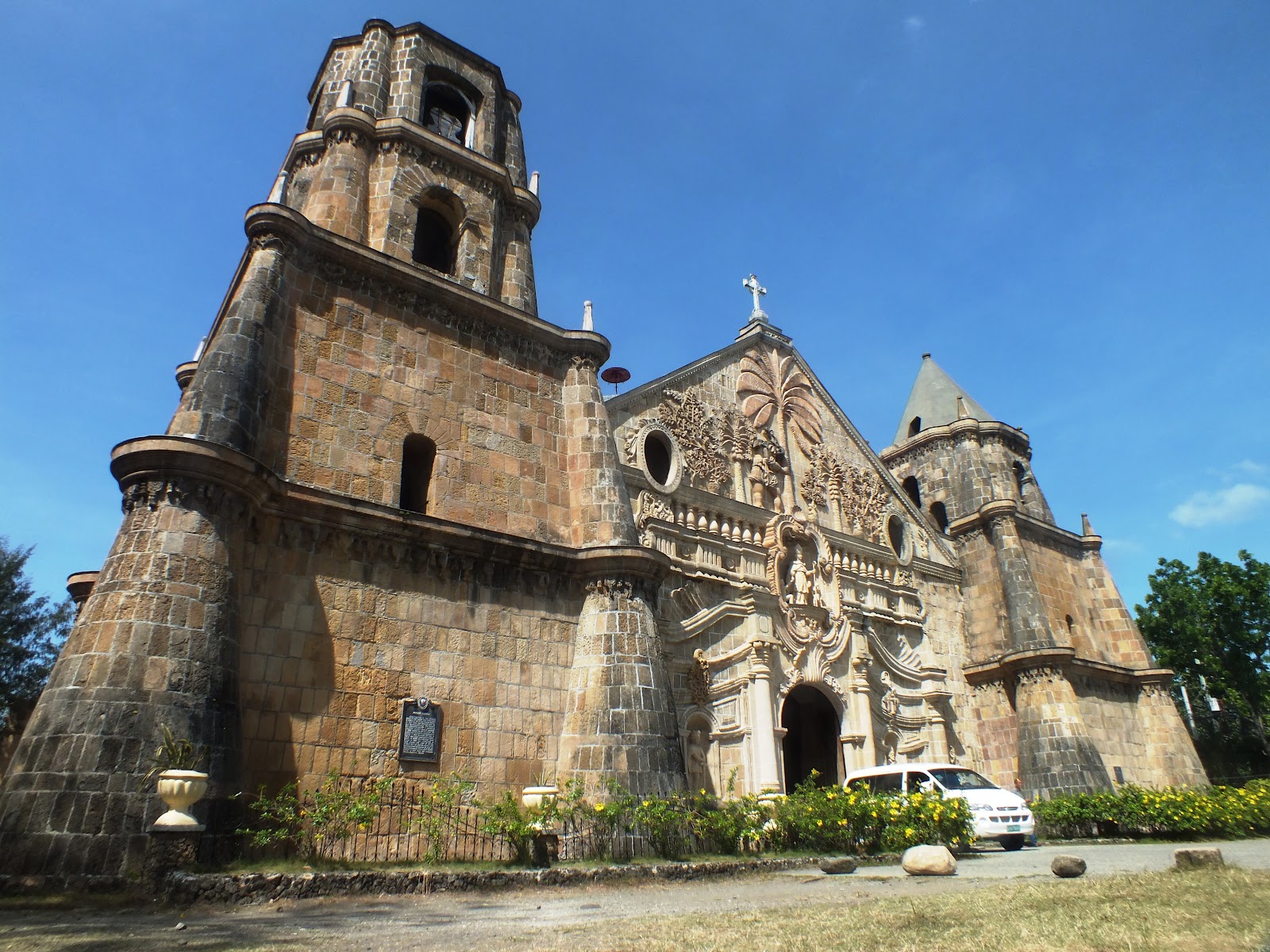
The Philippines is divided into three main regions: the large islands of Luzon and Mindanao in the north and south respectively, and the cluster of islands in between that is known as the Visayas. It was to the Visayas that the first Europeans came. It is here that the Spaniards first converted the locals to Catholicism, here that they founded their first capital at Cebu (although at the time, in true Catholic fashion, they called it Villa del SantĆ­simo Nombre de JesĆŗs, until they realised that they were spending half their time writing the name on official documents). That the Visayas was the epicentre of Spanish colonialism in the Philippines is evident from the local place names: Toledo, Compostela, Sevilla, Santander, Cadiz and Valladolid all named after great medieval Spanish cities. However political and economic power has long since moved to Manila, with the local Manila language of Tagalog being imposed as the national one despite the fact that more people speak Cebuano and Visaya, a fact which still rankles amongst the locals.

The Baroque church of Miag-ao is the best example of the merging of Spanish and local architectural influences. The main relief shows Saint Christopher walking through a landscape of papaya trees and coconuts.


Monday, January 16, 2012

Being Choosy About The Choice To Choose

As I mentioned in my previous post my time here in Taiwan has coincided with election season. In western Europe elections are not particularly visible to the casual visitor going about their daily sightseeing. The same cannot be said for Taiwan. Posters supporting this or that candidate, with the number to tick on the ballot paper prominently displayed, occupied every free bit of wall space and every lamp post, even in the meanest little village. Everywhere volunteers in blue waistcoats can be seen canvassing and handing out fliers whilst scooters and vans with loudspeakers diligently plough the streets declaiming to all who will listen the merits of their party over the other.

Election flags outside the KMT party offices in Taichung. The incumbent president, Ma Ying-jeou (on the left with a corny "fist-pump" gesture), was running for a second term.


Sunday, October 23, 2011

8:15. The Time It's Always Been

The name Hiroshima will forever be linked in the consciousness of the world with the events of the 6th of August 1945, when the first atomic bomb was dropped on Japan, ushering in the nuclear era with a bang. A bang so large that it destroyed 90% of the city and killed almost half of its population and helped precipitate the end of the Second World War (although some academics argue that the USSR's declaration of war against Japan and invasion of Manchuria on the 9th of August was a far greater reason for their surrender). The effects of the atomic bombs on the world were momentous and too great to mention here, but in Japan it led to the pacifist constitution and a widespread national desire for peace (not that Japan doesn't have its militarist nationalists, and its continued inability to admit and apologise for, rather than regret, its World War II atrocities doesn't help make it any friends in the region). The epicentre for the peace and nuclear disarmament movement worldwide is undoubtedly Hiroshima's Peace Memorial Park where a museum, shrine, cenotaphs and statues pay moving tribute to those who perished on that fateful day. The symbol of the complex is the A-Bomb Dome. The building was an exhibition hall before the war and was almost directly below the bomb - the hypocentre, or ground zero - when it exploded (the bomb was detonated 600m above the ground so that the destructive heat and shock waves would not be impeded so as to cause maximum damage) and so its vertical walls survived the devastating blast since they were perpendicular to the shock waves. Its preserved skeleton serves as a grim reminder to what happened on that fateful day.

The empty shell of the A-Bomb Dome serves as a stark reminder of that horrific day 66 years ago.


Monday, May 30, 2011

Vortex Of Unrest

I've wanted to visit Central Asia for a long time now. It's a region that falls well underneath the radar of most peoples' consciousness and yet has a rich history and varied ethnic and cultural patchwork. In fact it is the cline at which the Indo-European and Oriental peoples meet, producing physiognomies from classic European to Han Chinese with everything in between, especially in Uzbekistan and Afghanistan. The town of Osh where I am now epitomises both the best and worst aspects of this fact.


The main entrance to the Osh bazaar says "World Peace" along with a monument with three doves, whilst behind lie burnt out stalls from last year's clashes.

Thursday, April 28, 2011

See The Sea Before It's Sand (aka The Importance Of Carrying Out Environmental Impact Assessments And Heeding Their Warnings)

From Bukhara I followed the Amu Darya on its northwesterly course. It cuts a fertile, verdant swathe through the otherwise inhospitable landscape of the Karakum desert to the south and Kizilkum to the north (the Black Sand desert and the Red Sand desert respectively, although, to be honest, both looked pretty sandy coloured to me) and is, and has been, the life-blood of the region for millennia where water is the most treasured commodity of all (an interesting, if useless, factoid, except for those who participate in pub quizes, is that Uzbekistan is one of only two countries in the world - the other being Liechtenstein - that is doubly landlocked i.e. a landlocked country that is itself wholly surrounded by landlocked countries (the Caspian and Aral seas don't count as they are technically lakes)). On its way the great river passes the historical cities of Khiva and Urgench before passing by Nukus, the capital of the autonomous republic of Karakalpakstan, and finally emptying into the Aral Sea. At least that's what older maps would have you believe. That's before the Soviet authorities, in their infinite wisdom, brought about the world's greatest environmental catastrophe, perhaps all the more catastrophic for the general worldwide ignorance and apathy that has accompanied it.

A couple of rusty boats sitting high and dry where the sea used to be at the "ship graveyard" at Moynaq.

Thursday, April 14, 2011

Back In The USSR

I hadn't even crossed the border to Turkmenistan and I already felt the familiar Soviet vibes: decrepit border-post, old ladies with enough gold teeth to buy a Merc, oversized shoes and countless forms and endless bureaucracy feeding the KGB machine. I was getting too comfortable in Iran and Turkmenistan is just what I needed to jolt me into action.

Turkmen family visiting the ruins of Merv on the weekend. I particularly like the elegant, colourful velvet dresses of the women.


I must admit that Turkmenistan wasn't at all like I had expected. I realise that after having travelled so much that prior expectations are to be taken with a shovel-full of salt, but I couldn't help myself as the country was such an exotic enigma with many outlandish tales swirling around it was hard to know what to believe. I was perhaps expecting a nation of automatons that had been brainwashed into acquiescence. Instead what I found was a surprising degree of normalcy. On my first day there I visited the ancient ruins of Merv. It was a Saturday and I saw many local families on day-trips, having pic-nics and generally enjoying themselves. Kids playing football, women dressed in traditional colouful, long velvet dresses and men knocking back the vodka. They seemed open and friendly and quite curious, although conversations generally didn't go far due to my broken Russian and my unwillingness to stray into politics (which, I was later to find out, was the right course of action). Otherwise the roads were in pretty poor shape and lacking in any signage, but were populated by surprisingly decent cars: mainly Toyota sedans of various descriptions. It was later whilst taking a shared taxi that I learnt the reason for this: they are second-hand imports from Japan. And due to the steering being on the wrong side there is a burgeoning cottage industry of steering wheel transposition in Turkmenistan.

Some local guys out for a spot of fishing and a picnic on the weekend in Merv. When they saw me they insisted I join them for lunch, washed down with some strong homemade vodka (the Russian influence easily trumps centuries of Islam!).


Saturday, April 02, 2011

Persian Paradoxes And Politics

In my time here in Iran I have come to regard it as a country of paradoxes. I've already mentioned a few, such as the surprisingly good transport infrastructure paired with the complete lack of respect for road rules, and the Iranian love for camping and the outdoors, as long as they don’t have to leave their cars. Today I want to cover a few more as well as touching on some political issues. So please bear with me as this post may be slightly disjointed.

Perhaps the biggest paradox in Iran is that of its women. The overwhelming view of Iran’s women in the West is of a poor, repressed underclass, forced into submission and degradation, hidden away behind chadors and hejab. I have found the truth to be very different. First there are the simple facts: women form the majority of university graduates, they can work, run for parliament and drive cars. Significantly better than most countries in the region. Sure, there are many limits to their rights, and in theory permission from male guardians are required although often not in practice. I find the obsession of the West of the mandatory wearing of the headscarf to be very much misplaced. It is a very small, cosmetic annoyance and is the least of women’s worries in Iran (what Western media fail to report is that there is also a dress-code for men as well, which, although less restrictive, is also a reality). But then there are also the women themselves: fiercely independent, resourceful, spirited and clever they are universally the driving force within any household. They don't let the restrictions of the regime get in the way of chasing their dreams. Throughout the country I have been surprised by the strong women who are bold and outgoing and unafraid to air their opinions. Unlike their more emancipated Western sisters who take their freedoms for granted Iranian women are aware of what they have fought to earn and guard it jealously.


A simple wristband but one that could potentially get you arrested, symbolising, as it does, the pro-reform green movement.


Wednesday, March 16, 2011

A Fire That Can't Be Put Out

If you were to have walked the streets of Tehran last night you would have been forgiven for thinking that there was a civil war going on: bonfires were burning in many streets, riot police were out in force and explosions could be heard throughout the city. However this was just a standard Charshanbe Suri in the Islamic Republic. As I mentioned previously, the biggest holiday in Iran is No Ruz, or Persian New Year, which takes place on the spring equinox (usually the 21st of March). The festival predates Islam by about a couple millennia and is intricately related to pagan and Zoroastrian purification rites. Due to its non-Islamic roots the current regime frowns upon its celebration, especially the more exuberant parts, most notably Charshanbe Suri.

A traditional haft sin table with ritual objects to symbolise health, wealth and happiness for the coming year.


Wednesday, February 02, 2011

TV Politics

In a few days I plan to head south to discover explore some parts of Iran that I have yet to see, but in the meantime my days are mainly spent working on my pictures (less than 1500 to go now). The TV is often on in the background, which is something of a novelty as I rarely have the opportunity, or even feel the need, to watch TV whilst travelling. Like everyone else in Iran we have satellite, even though it is illegal, and so have been listening to the news quite regularly. These are certainly interesting times to be in the Middle East as revolutions rock Tunisia and Egypt. Personally I am very happy that the people of these countries are managing to overthrow their brutal governments and I wish them better ones in the future (and if the protests spread to other countries in the region then so much the better, as there isn’t a single one that has a legitimately fair and representative government, not even Israel or Lebanon).
The reactions of other countries has also been fascinating in terms of worldwide realpolitik. The West, and most notably America, have been very muted in their response because these were secular dictatorships propped up by Western money and influence. The paradox and hypocrisy of Us calling for greater democracy and freedoms in the wider world whilst supporting such regimes is blatantly apparent to the people of the region. Last week Obama called for “restraint from both parties” in Egypt, somehow implying that the ordinary people, who after 30 years of repression were protesting for their basic civil rights and an end to the endemic corruption of the Mubarak government, were somehow as much to blame as the latter. Such pussyfooting about has left a vacuum where opportunists have stepped in: the Iranian government is claiming the protests are inspired by the revolution of ’79.
And therein lies the crux of what I see as the fatal flaw in America’s dealing with other countries, especially those of the Middle East. They spout rhetoric about democracy, moral high-grounds and universal human rights, and yet they back unsavoury regimes for the sake of expediency, believing that the ends justify the means. Unfortunately for them, when the ends are ethics and the rule of law, the means are the ends. By that I mean that you cannot act immorally to promote the spread of justice and morality. By doing so you undermine any credibility you might have. Every regime here is pretty much equally corrupt, venal, oppressive and unfair. But by labelling some as “good” and others as “bad” based solely on how much the regime toe’s Washington’s line, yet couching the rhetoric in human rights, America ends up alienating the local population who are far more savvy about world politics than their Western peers. And so you get the surreal situation, where the Iranian regime, which is far from democratic, is supporting pro-democracy protests in a country that has long been an adversary, whilst America, the leader of the “free world”, is praising an oppressive dictator and seeking to keep him in power.
Similarly, if you compare the reaction from foreign powers to the protests both in Tunisia and Egypt to those in Iran a couple of years back there is a world of difference. Back then they were incredibly vocal in their support of the protesters’ rights and demands and did their utmost to ensure that communication was maintained via the internet and other media. Now, when the Egyptian authorities have taken the unprecedented step of blocking off the entire internet in the country there was barely a peep to be heard.
Geopolitics really is depressing when you start looking at it closely.

Friday, October 22, 2010

Gypsies, Tramps And Thieves?

It is common, no matter where you travel, for locals to ask you what you think of their country. Romania is no different, but with an added extra: people declaim that Romanians are not all gypsies and not to judge the country because of them. This is telling for several reasons. Firstly that this is the impression that many in the West have of Romania and Romanians (if they have an impression at all); secondly that ordinary Romanians are embarrassed by this preconception; and thirdly that this is a negative image. It is sad that in today's world where we have done our utmost to banish discrimination against blacks, Jews, homosexuals, the disabled and women, that prejudice against gypsies, or Roma, is not only widespread, but also accepted amongst many, otherwise liberal, sections of society. As a people they are the poorest and most disadvantaged in Europe. How did this come about? and who are the Roma anyway?

Colourful Roma clothes worn by the friendly Gabor family with whom I stayed.

Sunday, October 03, 2010

Hello Lenin

I was talking to my father a couple of days ago on Skype (bless the internet!) and he was surprised to learn that I was still in Moldova. What could there possible be there to keep me so long? he wondered. And it is true that touristic sights are thin on the ground; but what Moldova lacks in castles and museums, it makes up for in geopolitical quirkiness. Not only is it home to Gagauzia, but it also has its own breakaway province, the self-proclaimed Pridnestrovian Moldavian Republic (PMR), although it's more commonly known as Trans(d)nistria.
There's not much in the way of pretty public spaces so young couples about to get married must make do with what they have for their wedding photos. A tank certainly says romance to me.

Friday, October 01, 2010

Moldova On My Mind

Moldova is not a country one hears about often. It briefly surfaced in the consciousness of the world's media last year when riots protesting the results of the elections forced them to be held again. And, just as quickly as it had appeared, Moldova sank into media oblivion once more as pictures of crowds on the streets opposing policemen dried up. And although the ruling Communist Party had finally been ousted from power, the political stalemate that followed has dragged on until now with no signs of being resolved any time soon (there is still no president 18 months on after several failed votes and referenda). The political deadlock is just one facet of Moldova's biggest problem: corruption. Stifling bureaucracy, palm-greasing and exploitation have decimated endemic industry (almost every factory I've seen either closed or boarded up). Instead everything seems to be going on in the grey or black economies. So despite its official GDP being less than that of Malawi or Benin, the country is still far more developed than almost every African country. So much that goes on here is unaccounted for and it is thought that up to 20% of the entire population (so around a third of the working population) is out of the country and working abroad and sending remittances back home. This becomes very obvious when you walk through some dusty, anonymous neighbourhood and spot an immaculately clean, recently-constructed, 2-storey house, bristling with satellite dishes; the product of a wandering son who made it in either Italy, Russia or Turkey. These remittances make up about a third of the countries GDP and, in effect, allow it to keep from drowning. The drift abroad seems to be all-pervasive with younger people, many of whom are applying for Romanian passports (or Russian ones for Transnistrians), entering the Green Card lottery, or simply making their way to neighbouring countries, where jobs exist, illegally. The only people left in Moldova are the old(er) and young who have started families. The number of teen girls pushing prams in parks, whilst their boyfriends have probably scarpered abroad, is quite overwhelming. Most Moldovans seem to be looking for any way they can out of the country.

A new addition to Moldova's freedom of speech landscape: a large, white wall opposite the parliament building. People are free to write down any comments, gripes, criticisms or suggestions aimed at the politicians across the street.


Wednesday, September 15, 2010

Divided Yet United

The popular narrative when Ukraine is being discussed in Western media is about an east/west divide between the Russophile east and the Europhile west. As generalisations go it's pretty accurate: there is indeed a split between an ethnically Russian, industrial (with the smokestacks to prove it), richer, urban east and the Ukrainian, agrarian, poorer, rural west. (Interestingly though, the west of Ukrainian is the only part that isn't undergoing a demographic meltdown as low birth rates and high death rates in the east are leading to Ukraine having a significant population decline - in the top 5 in the world according to the UN.) This was highlighted in recent years by the so-called Orange Revolution and the subsequent political crises and falling outs with Russia, followed by the return to power of the pro-Russian faction last year. Although the political factions may seem very different at first glance, all Ukrainians I have spoken to, regardless of background, are united in their mistrust and disgust for them and mainly regard them as varying shades of shit. The problem is corruption that permeates through all levels of bureaucracy, from the humblest pen-pusher right to the very top. Everybody is in it to line their own pockets irrespective of the knock-on effects. I've heard from people that in order to secure a civil service job it is not uncommon to slip a small envelope worth five times the annual salary, with the expectation to recoup the capital investment through kickbacks. The people with the power to do something about this sad state of affairs i.e. the politicians, are also the ones who profit most. One example is Yulia Tymoshenko, one-time leader of the Orange Revolution and ex-Prime Minister, who tries to portray herself as an ordinary woman of the people, living in a simple house in Dnipropetrovsk, despite, in fact, being one of the richest women in the country thanks to some dodgy energy deals in the 90s. They would rather remain big fish in a small pond, and jealously guard their interests, rather than letting the country open up and flourish. It's a crying shame as I doubt that I have yet seen a country that is so underperforming to its true potential: an abundance of natural resources and an educated and cheap workforce right next to the biggest single market in the world. The country should be raking it in.
The giant statue of Lenin in Kharkiv's central square still dominates. He is perhaps one of the figures both Ukrainians and Russians feel a similar affection towards.

Monday, August 09, 2010

(Re)Viewing History

Travelling, for me, is a way to fill in the gaps of my understanding of the world we live in, each place visited adding a small piece of the infinite jigsaw that is the world. If you don't understand where people come from, - their past, their traditions, their culture - you can't understand where they are now and you will be forced to misunderstand the events of today.

My last stop in the Baltics was at Grutas Park. A local entrepreneur bought up many of the Soviet-era statues of Stalin, Lenin and various other local Communist personalities and has created a sculpture garden along with expositions of other memorabilia from the time, earning it the moniker of Stalin World. I find the name unjustified (probably some media hacks trying to stir up some controversy) as the park is very informative and balanced in its message, describing in detail the terror, suffering, hypocrisy and even idiocy of the regime. It was an apt summary for the region whose trio of small countries share a very similar history over the past 150 years or so, and it is one that has really made me stop and think.
Has anyone seen my thumb? One of the myriad Lenin statues that dot Grutas Park