Wednesday, October 29, 2014

Maps And Figures

It probably won't come as a surprise to people that I love maps. From an early age I pored over them, and on our biannual family drives from Scotland to Czechoslovakia I would study our route and navigate for my dad. As I grew older I understood how maps could display so much more information than simple topography and place names: climate, industry, agriculture, ethnography, linguistics, politics - all are made clearer and more immediate with the help of a good map. I'm particularly fascinated by historical maps, with their imprecise coastlines, challenging handwriting, and flights of fancy (here be dragons). But especially because they show a reality that once existed and which isn't necessarily acknowledged today. Sure, London and Paris have been around for over 1000 years, but if you go back 2000 years then they disappear, only to be replaced by Londinium and Lutetia. Borders, which, today, feel immutable and permanent, ebb and flow, disappearing and reappearing with metronomic regularity. Names and national identities, for which people go to war and innocents die, are in fact ephemeral and subjective. Belarus epitomises this (un)reality perfectly. Attempts to find (the name) Belarus in old maps will more than likely come up blank; and if you do find it, it won't be where it is today.
Maps have a strange power. This map of China, from 1735, was recently given as a present from German chancellor Angela Merkel to China's president Xi Jinping on a state visit. A nice present you would think. However it caused huge waves on the Chinese blogosphere because it doesn't show Tibet, Xinjiang, Taiwan or Inner Mongolia as being Chinese, despite the Chinese official narrative of these being immutable parts of China since "ancient times". [For a more detailed analysis see this article.]

Friday, October 24, 2014

A Desperate Despot?

For the "last dictatorship in Europe" I was surprised that I could arrive in the heart of the country without having my passport checked. It's funny how that sobriquet, bequeathed during George W. Bush's presidency, has come to stick to any and every mention of Belarus and its leader Alexander Lukashenko (not that they get many mentions in the world's media). After spending just a few days in Minsk talking politics with almost everyone I met (locals are far more world-savvy and open with their views than one would imagine), I realised that it's an over-simplification that obscures looking at the country realistically (for an idea of the sort of journalistic hatchet-jobs out there you can read this recent article in GQ). Sure, there's no denying Lukashenko has a tight grip on power, political dissent is only permitted within narrow limits (as attested to by the number of people behind bars for their contrary political views), and there is more than a little corruption to be found; nevertheless these truths need to be tempered with others that don't sell as many newspapers.

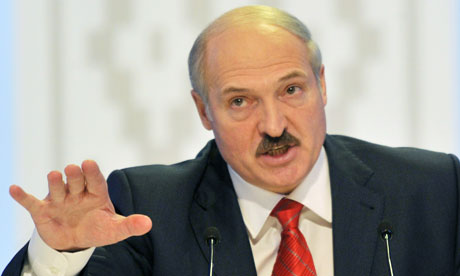
"Just wait a sec, I haven't told you the punchline yet." Belarus's notorious president Lukashenko sporting his trademark moustache. [Source: Guardian.co.uk]

Wednesday, October 22, 2014

Old Town, New Town

My "holiday" started at 11:00 on Sunday as soon as breakfast was over in the Saint Petersburg hotel and I had said goodbye to my charges. It started snowing at 11:30. This was not a great start. Although there are several daily, direct, trains from Saint Petersburg to Minsk, that would have been too easy. Instead I decided to stop at Novgorod along the way. Located some 150km south of Saint Petersburg it is the oldest city in Russia, which is somewhat ironic, given that its name translates as "New Town".


A footbridge over the Volkhov river in Novgorod. The city based its wealth on controlling this important crossing.

Sunday, October 19, 2014

It's Work Jim, But Not As We Know It

Hello dear reader(s)! You may have surmised from my writing hiatus that my travels are over and that I have returned to the world of the working. And you would be right ... to a degree. It is true that I now have a job, with a pay-cheque and everything, however the travelling has not abated as much as I had envisaged upon my return to the UK.

Upon my return to the UK I decided to do a little tourism somewhat closer to home. Despite having worked a mere 15mins walk from the Tower of London for over 1.5 years I had never actually visited the iconic monument - a lacuna I quickly set to rights.

Thursday, January 02, 2014

North America In 20 Photos

Here are a collection of 20 of my favourite photos from my travels through North America that didn't make it into the blog for whatever reason. I hope you like them.

The variegated leaves of undergrowth shrubs in the cloud forest of Panama.

Family off on a cycle trip in Nicaragua. A very efficient use of limited resources.

Tuesday, December 17, 2013

Back For Breakfast

My last days in America heralded the coming of winter, with heavy snowfalls and freezing temperatures. On the one hand I was glad, as low temperatures mean more layers of clothing, which in turn leads to a lighter backpack. However that does not help balance out the discomfort of colder and shorter days. Plus I had reached the end of the road on the American continent. The only way was back to Europe. It was time to go home. Not that this was a decision that had pounced on me suddenly out of the blue. In fact I had already decided a year before that I would be home for Christmas 2013, and was sticking to my plans.

My only possessions (apart from my backpack) to have survived the entire, 45 month circumnavigation: my sleeping bag, my sleeping bag liner, a base layer shirt, my Czech passport, comb, razor and my toothbrush.


Sunday, December 08, 2013

Not The Home Of The Braves

From Montreal it was due south to New York, my last stop, not just in America, but of the entire trip. It was strange for me to be thinking about being back home after so long on the road, so I decided not to think about it and instead concentrate on exploring New York. For many New York is America. Its dominance, both economical and cultural, is unparallelled. Its locales made famous from innumerable Hollywood films: Times Square, Wall Street, the Brooklyn Bridge, the Statue of Liberty, Fifth Avenue, the brownstones of Greenwich Village, the Empire State Building, and Central Park are as well known to people from Panama to Peshawar as much as they are to the populace of Pensacola. I had, actually, been there before, way back in 2001, as a young student on my summer holidays (ah, how innocence fades) and was interested to see how I would see it with more jaded eyes.

Manhattan's exclusive 5th Avenue looking uncharacteristically empty on a Sunday morning.


Monday, December 02, 2013

The Real Melting Pot

America is famous for being a melting pot of ethnicities and cultures. And it is true that it is a nation of immigrants from all corners of the earth who have come, throughout the past few hundred years to escape persecution, gain an education, live in peace, and work towards a better life for themselves. Americans will regale you with details of their ethnic stock (one sixteenth Sioux, another English, one quarter Irish, one quarter Polak, and three eighths Chinese) and proudly proclaim that they are African-, German-, Chinese-, Italian- or Irish-American despite a complete lack of connection to this urheimat except for dressing in green once a year during Saint Patrick's Day, a penchant for sweet and sour stir fry, or a little more rhythm than your average citizen. Canada must be just the same, right?

"I am Canadian!" Canadians are quick to distinguish themselves from their southern neighbours. This beer add humourously captures these differences in a proud ode to Canadia. (Just a shame the beer itself is so bad.)

Saturday, November 23, 2013

Rusty

That America is the richest country in the world is well known. It manifests itself in towering skyscrapers, the car culture, its gargantuan military, its army of labour-saving devices, the dominance of Wall Street and American corporations throughout the globe, and, of course, the American Dream. Convenience is king, and, if you have a decent job, life is comfortable and easy. This big, bold brashness is evident in Chicago, the Windy City, and acknowledged capital of the Midwest. Lazily sprawling westwards from the shores of lake Michigan, the skyscrapers of the Loop (the central business district). Indeed, although may think of New York and Manhattan when talking of skyscrapers, it actually Chicago that is the spiritual home and birthplace of the skyscraper. The first steel-framed skyscrapers were built there; the revolutionary tubular design that allowed even taller, more efficient towers was developed there; and of course it is also home to the Sears (aka Willis) Tower, which, up until recently, was the tallest building in the Americas.

The lakefront skyline of Chicago with its huddle of skyscrapers.

Saturday, November 16, 2013

Paradoxysms

Countries often have deep, internal divisions that cleave the society in two. Often the divide is between a poor, religiously conservative rural population, and an urban, middle-class, educated, liberal one. I found this particularly apparent in countries such as Iran, Turkey and China, which are still undergoing transitions towards more industrial economies. In America the transition has occurred but the division still exists to a large degree, and somehow the rural poor have been duped into voting for rich corporate interests. But taking pot-shots at American political dysfunctionality and woeful health provision is too easy and instead I want to look at the quirkier paradoxes and polarisations that exist within the US.

For poorer Americans access to fresh fruit and vegetables is not only severely restricted, but food education is of a very low standard. Whilst wandering the African-American museum in Chicago I stumbled across this educational play aimed at younger children about the benefits of fresh fruit and veg using hip-hop and gospel music. Here the hero (a broccoli) is being led astray by a couple of rashers of bacon. (Though it seemed to me that the bad foods had the best tunes.)

Monday, November 11, 2013

Straight Up The Middle

From Texas the logical and reasonable thing for me to do would have been to hug the southern states up until the coast before heading north to New York, so as to stay in a band of temperate weather for as long as possible. Logic is not my strong suit and so instead I headed, more or less, straight north cutting through the much-neglected Midwest. This large, flat expanse, right in the middle of America, is oft-overlooked by visitors to the country who tend to gravitate to the coasts. for me that was reason enough to visit as I was curious to uncover (if only a small part of) the hidden heart of America.

For many towns around the world 4pm on a Saturday afternoon might be considered the busiest time of the week, but not so in Lufkin, Texas, which resembled a ghost town. In the 2 hours that I walked its streets I literally saw less than a dozen other people walking.

Monday, November 04, 2013

I See Dead People

My time in Huntsville proved to be unexpectedly eclectic, however my initial reason for visiting was simply to visit the prisoners' cemetery, where all those who die whilst in the "care" of the Texas justice system, and whose bodies are not claimed by family, are buried. Now it may seem like a macabre thing to visit, but I found it a sobering and important place to have seen. The cemetery is surprisingly large, unadorned and unmarked, occupying a wasteland between two nondescript roads on the edge of town. No signs announce or inform the passer-by as to the site's identity, no fence separates it from its surroundings. Every expense has been spared. So much so that up until 2000 the graves were marked by a simple concrete cross inscribed with a date of death and prisoner number. Nothing more. Not even a name by which the deceased could be remembered. As if in death these people are no longer considered humans but simply numbers, a burden to be placed in the ground, a sack of shit that has the temerity to waste our tax-payer dollars.

A sea of concrete crosses devoid of any embellishments or even names to distinguish them, just a date and a prisoner number. According to Dostoevsky a society can be judged by how well it treats its prisoners, in which case America ought to perhaps take a look at itself.

Saturday, November 02, 2013

America, F#@k Yeah!

From Monterrey I caught a bus to take me over the American border and into Texas as I thought hitching might be problematic due to (perceived) violence from drug gangs. Having procured myself an online visa waiver I expected the crossing to be a formality. It wasn't. Unfortunately I hadn't read the small print on the customs website and the visa waiver doesn't apply to land borders and so not only did it cost me money for nothing, but I confused the hell out of the border guards who almost never see non-Mexicans crossing. This resulted in substantial attention from the immigration officials who interrogated me, took my photo as well as an entire set of fingerprints. Of the 65 border crossings I have had on this trip it was the most intrusive and time-consuming, even more so than upon entering and leaving North Korea. It took so long that my bus carried on without me, leaving me stranded at the border until the next bus came past eight hours later. Needless to say I was not impressed with my first contact with America. To be honest America is not the most compelling destination for me, the history isn't all that old, the culture rather mainstream, and the cities a bit too cookie-cutter. I would like to explore the natural sights, but it's too late in the year for that. Instead my two main goals are to see friends and family who I seldom get to see, and to try and winkle out a few experiences of Americana, the quirky, small-town, Midwest of America that makes the country so different from Europe.


A little clip of American cliches to get you into the mood (warning, NSFW).

Saturday, October 26, 2013

Heavy Industry, Light Art

During my previous Mexican jaunt I had spent quite a bit of time among the northern, colonial mining towns such as Zacatecas, Guanajuato and San Miguel de Allende. I had, however, missed out the largest of them all: Queretaro. I have no idea why I didn't go there the first time, but was glad as it gave me a point to visit on my way north as well as an opportunity to revisit the region with older, more understanding eyes (I'm a little mortified when I read what 23 year-old me was writing about the place). It also allowed me to meet some local people, and here I was really lucky to stumble upon Clara and Mario, a wonderful young couple who not only showed me the town, but also its varied culinary delights; the dry, semi-arid landscape of the central highlands; family life; and even the less picturesque, but deeply atmospheric, legacies of the mining history that can be seen in the ghost towns that dot the region.

The abandoned smelting furnaces of Pozos, one of the many ghost towns left over from the mining boom in Central Mexico.


Tuesday, October 15, 2013

Mexican Interlude

I spent a few more days in Mexico city with my parents seeing some sites, spending time with my cousins who live there, before they had to fly back home. It was important seeing them again and knowing that I'll be back home with them soon. As well as revisiting family I had mundane matters to take care of, such as repairing my laptop screen and finding another rucksack buckle for the interim one I had bought back in Lima and that had cracked in El Salvador. I didn't feel the need to do much sight-seeing though, having been in Mexico City before. In fact it was here that I started my first round the world trip, all the way back in 2004, and it was the first time that I had ventured out of my Europe-USA-Canada comfort zone. It was here that my worldly learning curve began and so returning was thought-provoking exercise in reviewing past experiences and opinions and seeing how much my thoughts had changed in the intervening years.

Big public education sign exhorting people to pay for their electricity and to adopt a more "legal culture". The non-payment of taxes and services is a huge burden on many developing countries where the bureaucratic infrastructure often can't cope

Monday, October 07, 2013

Pyramidal

At Chetumal, on the Mexican side of the border with Belize, I was met by my parents. Although I had seen my father a year ago I hadn't seen my mother in two and a half years ... and well, family is family. So my parents had decided to come out and travel with me for a while, see me and use my services as a tour guide in Mexico. They had already driven down from Mexico City and together we were to drive back up, catching some sights along the way. Of course with a hired car and staying in hotels this was not the sort of travelling I was used to, but I was determined not to let the softness get to me and tried to gently nudge them a little bit towards the edges of their comfort zone.


An advantage of travelling with my parents is that I get to eat far better than I usually do. Here we stopped at a lovely little seafood restaurant on the Caribbean coast in Veracruz.

Sunday, September 29, 2013

You Better Belize It

Belize is an odd country. In pretty much every way imaginable it is different from its Central American neighbours. Geographically firmly ensconced in the Central American region, but culturally much more Caribbean. Surrounded by Spanish-speaking countries yet anglophone. It remained a colony until 1981 whilst the rest of the region gained their independence 160 years earlier. Though partly thanks to that it has been a haven of stability whilst all around there has been turmoil and strife. It's a midget in terms of population, with fewer inhabitants than the Bahamas and fully an order of magnitude less than its neighbours. But what's it really like?

Although I missed Belize's independence celebrations by a day the bunting was still up during the length of my stay (do they ever take it down?). Here you can see that there is still fondness and attachment towards its ex colonial master.

Monday, September 23, 2013

Pirates Of The Caribbean

When the Spaniards first colonised the Americas their primary interest was gold and silver. Initially taken directly from the local civilisations, such as the Aztec and the Inca, and then extracted from the rich mines of Potosi, Guanajuato and Taxco. Once every year two great convoys of ships would sail from Cadiz to Havana before splitting up, one heading for Portobelo in Panama, and the other to Veracruz on the central Gulf coast of Mexico. For centuries these were the only Spanish ports in the Americas allowed to trade with Europe.

Even for Latin American standards the pace of life on the Caribbean coast is slow. It may seem idyllic, but the heat, humidity, sand flies and mosquitoes


Friday, September 20, 2013

Guat's Up?

Of all the countries of Central America Guatemala is hands down the richest in terms of cultural heritage. Not only was its territory was the cradle of the classic Mayan civilisation but, what is less known, it was also the seat of the Spanish viceroyalty that consisted of the entire region, from southern Mexico all the way to Panama. This is where the rich and powerful of colonial Central America lorded it over their indigenous subjects. Even post-independence Guatemala was the dominant country amongst the small statelets of the region. It wasn't until the inevitable civil war of the second half of the last century that pitted left wing intellectuals, reformists and guerrillas against US-backed right wing genocidal military dictatorships and death squads that the country became a byword for violence, danger and rural misery. Things have quietened down a bit over the past 10 years (a lot less violence but still plenty of rural misery as the right wing military elite are still in power) and the tourists have returned to see what they had been missing out on.

Quiche Maya lady in traditional costume selling embroidery to tourists.


Friday, September 13, 2013

Same Same But Different

Same same but different. It's a phrase many people who've travelled through southeast Asia will be instantly familiar with, where the pidgin English of the local touts isn't nuanced enough to incorporate the word "similar". The phrase is equally applicable for travels in Hispanophone America. The common language and shared colonial history unites the 18 countries and almost 400 million people. Yet despite the very obvious similarities, there are many differences, both profound and frivolous. The profound are the subject of many a book (I'm guessing) and scholarly essays. I, instead, would like to take a closer look at the frivolous and arbitrary.

Although maize is the basis of much Latin American cuisine from Bolivia all the way up through to Mexico the way it is prepared varies significantly. As you get closer to Mexico the slap slapping sound of tortillas being moulded becomes ever more ubiquitous.